Other Photo Gallery Pages
|
Photo Page 1 Photo Page 2
Photo Page 3
Photo Page 2
Photo Page 3 |
|
Agate Photos
Mt. Antero Photos
Amazonite Photos
|
| Tourmaline Photos
Ocean Jasper Photos
Rhodochrosite Photos |
Other Photo Gallery Pages
|
|
Photo Page 1
Photo Page 2
Photo Page 3 |
|
Agate Photos
Mt. Antero Photos
Amazonite Photos
|
| Tourmaline Photos
Ocean Jasper Photos
Rhodochrosite Photos |
These pictures are for the viewing enjoyment of everyone, and are presented as educational and informational. The specimens pictured are not for sale and are the property of myself, other collectors, or museums. Pictures of specimens other than what I own were for the most part taken at large gem and mineral shows, usually Tucson or Denver.
| Double-click on the thumbnail pictures to see the full-sized photos. Use your browser's back button to return here. | |
|---|---|
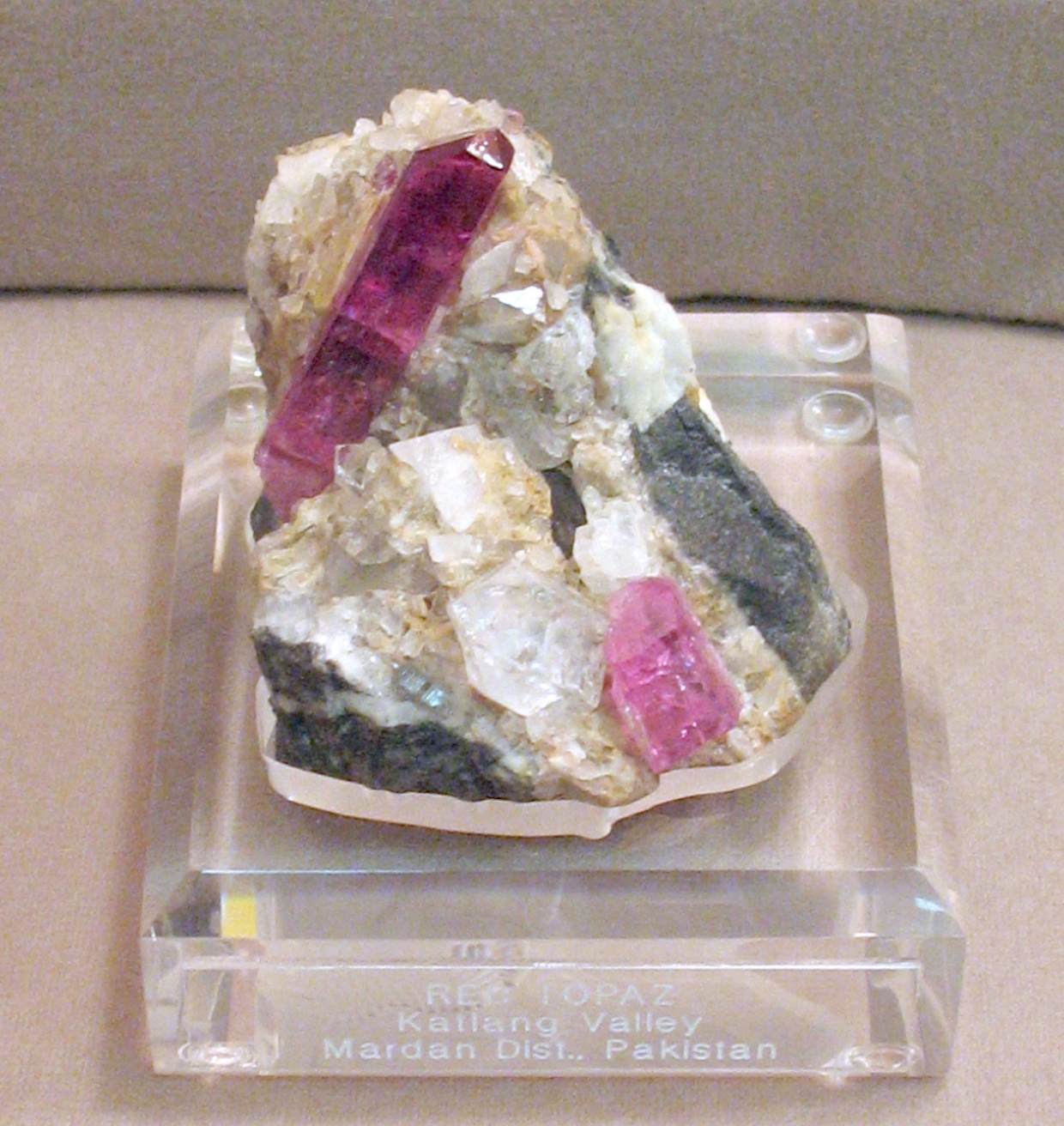 |
Hot! Red topaz is very rare, and has only been reported from Ouro Preto, Minas Gerais, Brazil and a small locality in Pakistan. The color is due to chromium content. This gem red one may be the finest in the world and was discovered at Katlang Valley, Pakistan. Note the pink xl at the lower right. Pink is also caused by chromium, just a lower content than the red. |
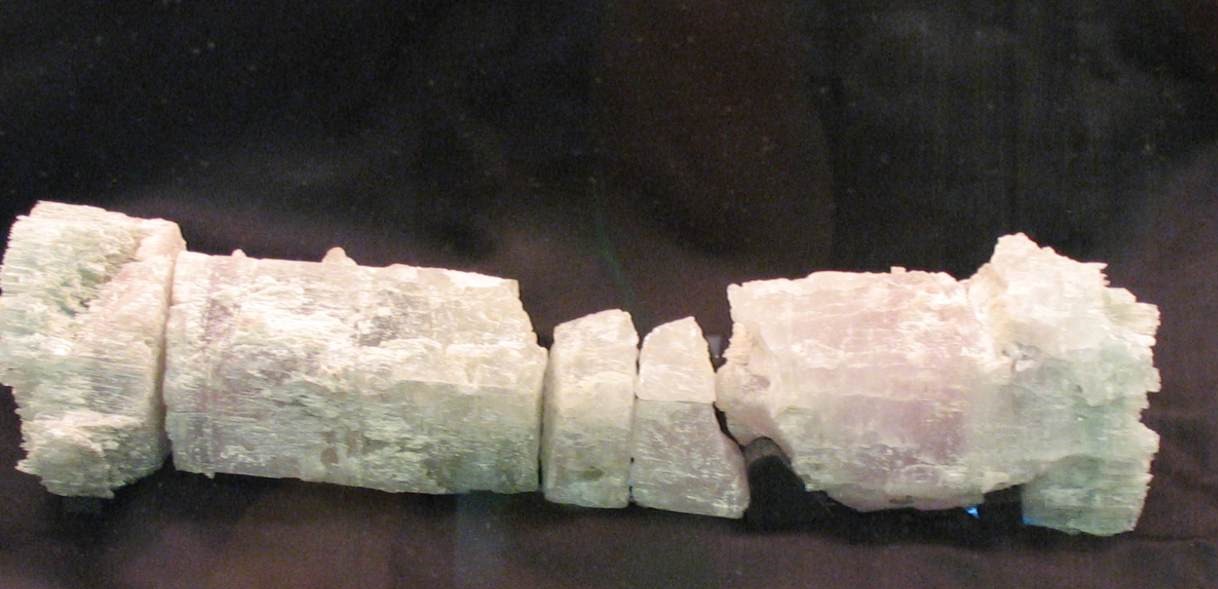 |
Interesting bi-color beryl, collected by Jeff Self on his claim on Mt. Antero. The piece was in sections in the pocket. It is etched, and not very gemmy (but will backlight with a strong light), but the center portion represents the largest morganite (pink/peach beryl) ever discovered on Mt. Antero. I had discovered a few small pieces (one with a gemmy termination) on the southwest ridge in the 1980's. Doris Drisgill also discovered a tiny euhedral xl a few years later near the Snowpatch, but we were not able to determine if it were beryl or apatite, since so many characteristics overlap and we didn't want to destroy it. Pink apatite was also reported from Mt. Antero by the late George Robertson and others. |
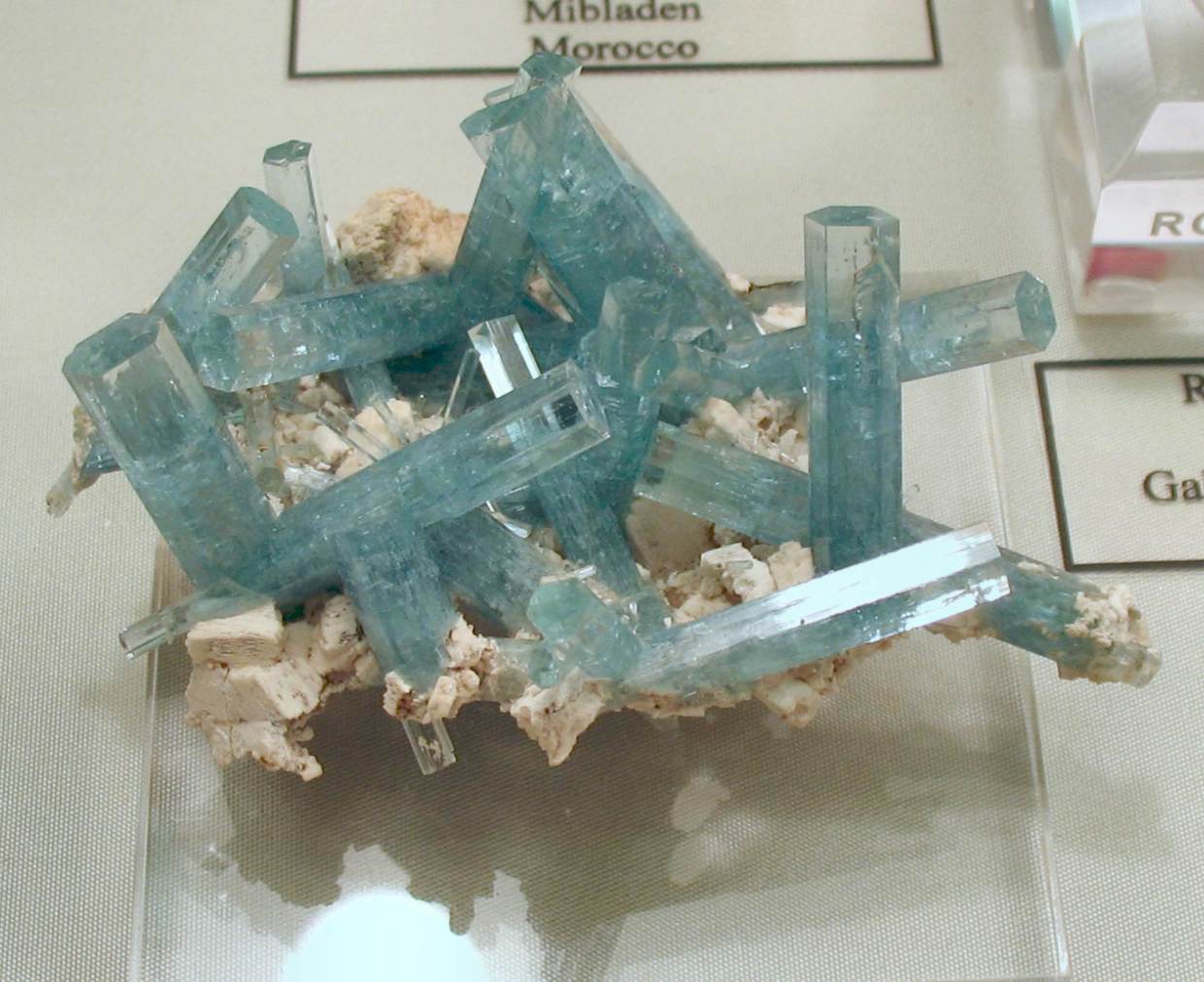 |
An incredible cluster of gem aquamarines on display at the Denver show, associated with small feldspar crystals. Unfortunately, I lost the locality for this, but believe it to be Pakistan. |
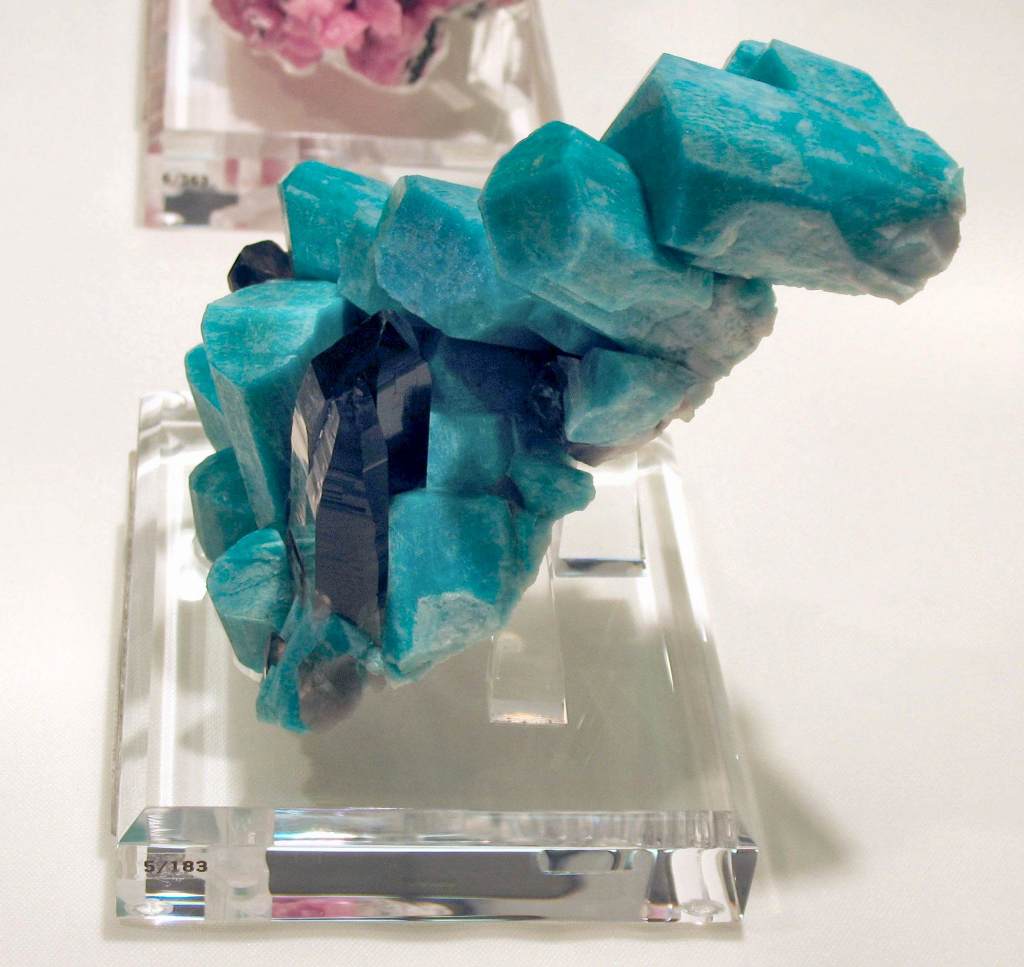 | A fine cluster of amazonites, with smoky quartz, from the Crystal Peak area. On display at the Denver show. |
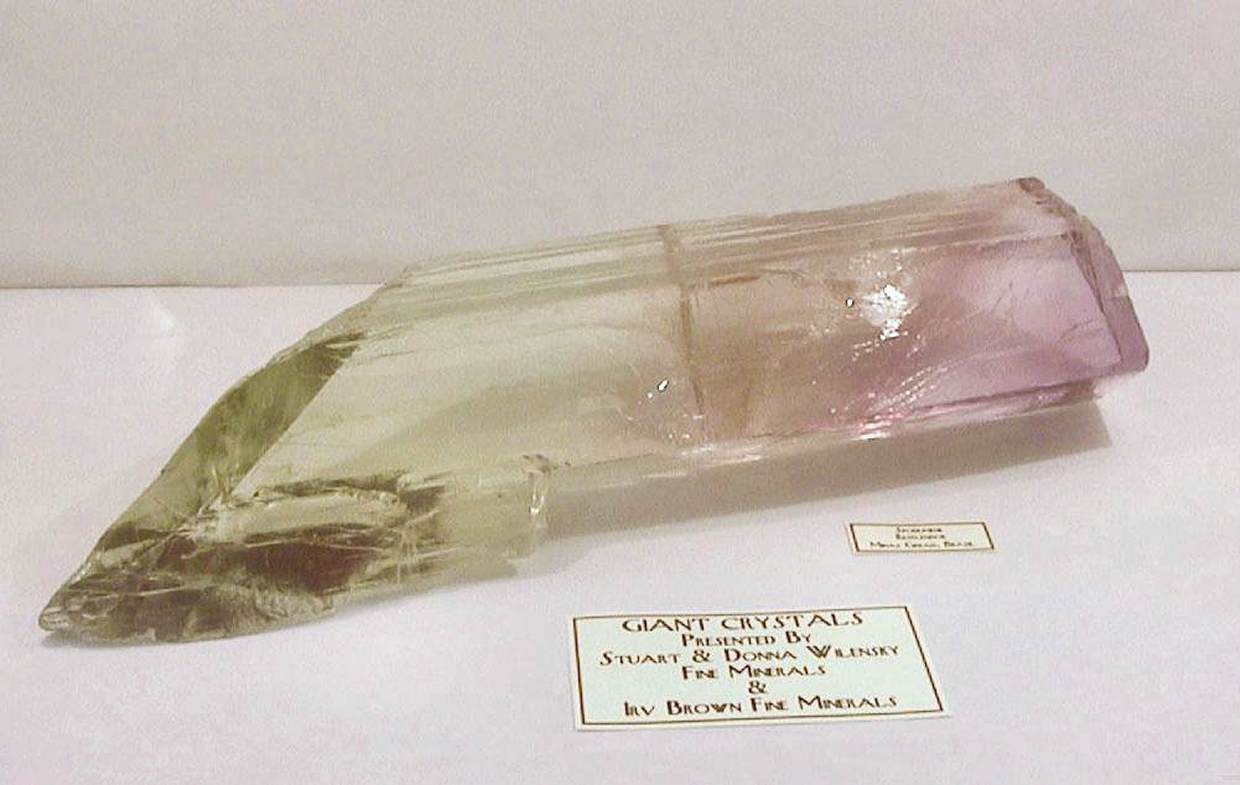 |
A huge gem spodumene crystal from Afghanistan. This one is part pink, part greenish-yellow. On display at the Tucson gem show. |
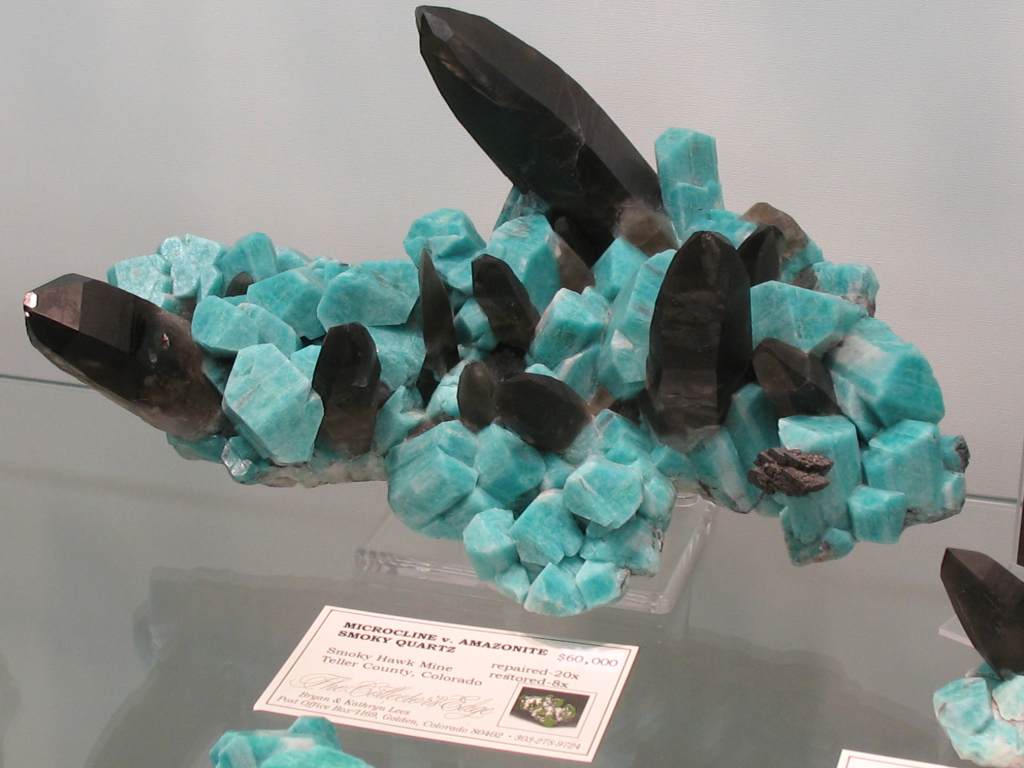 |
One of the finest amazonite groups out of the Crystal Peak area. This one came from Joe Dorris' Smoky Hawk Mine just a few years ago. |
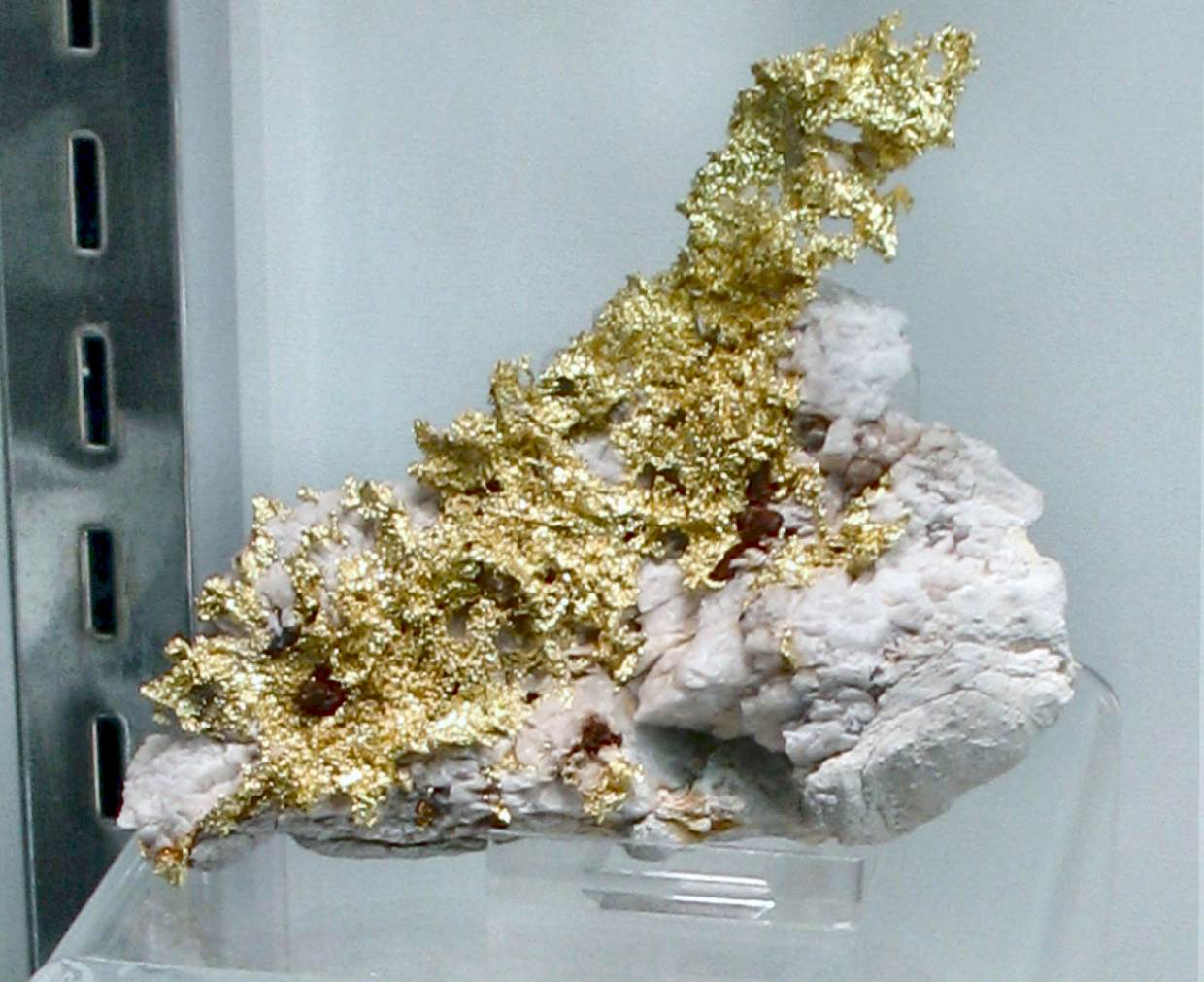 |
Fine crystals of gold on quartz from California. |
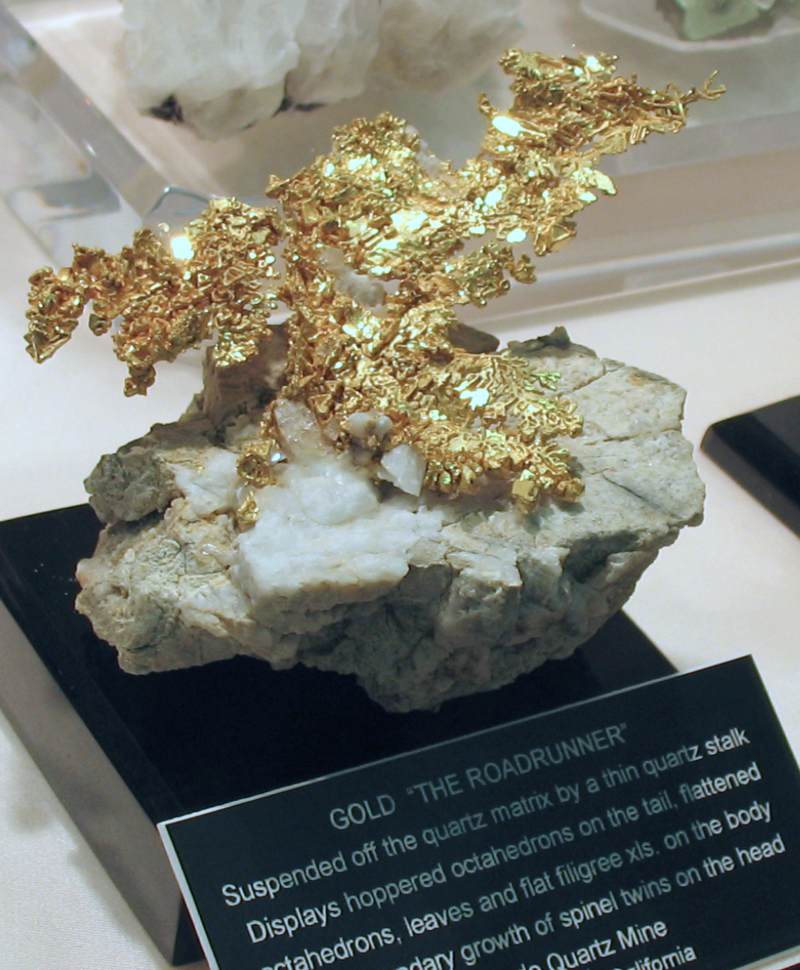 |
Another super California gold specimen. |
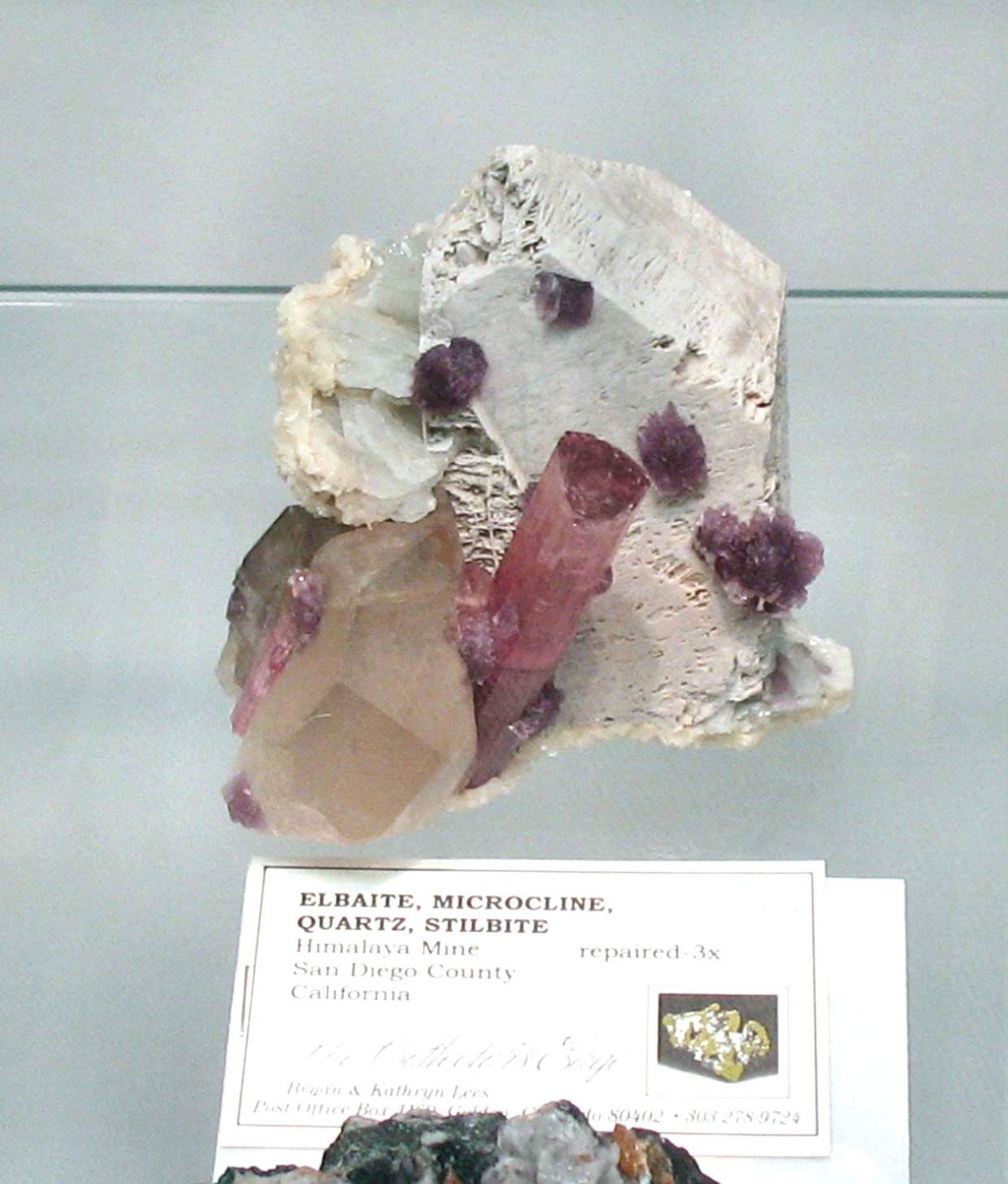 |
An attractive gem tourmaline perched on a matrix consisting of feldspar and quartz crystals from the world-class Himalaya Mine, Mesa Grande, California. |
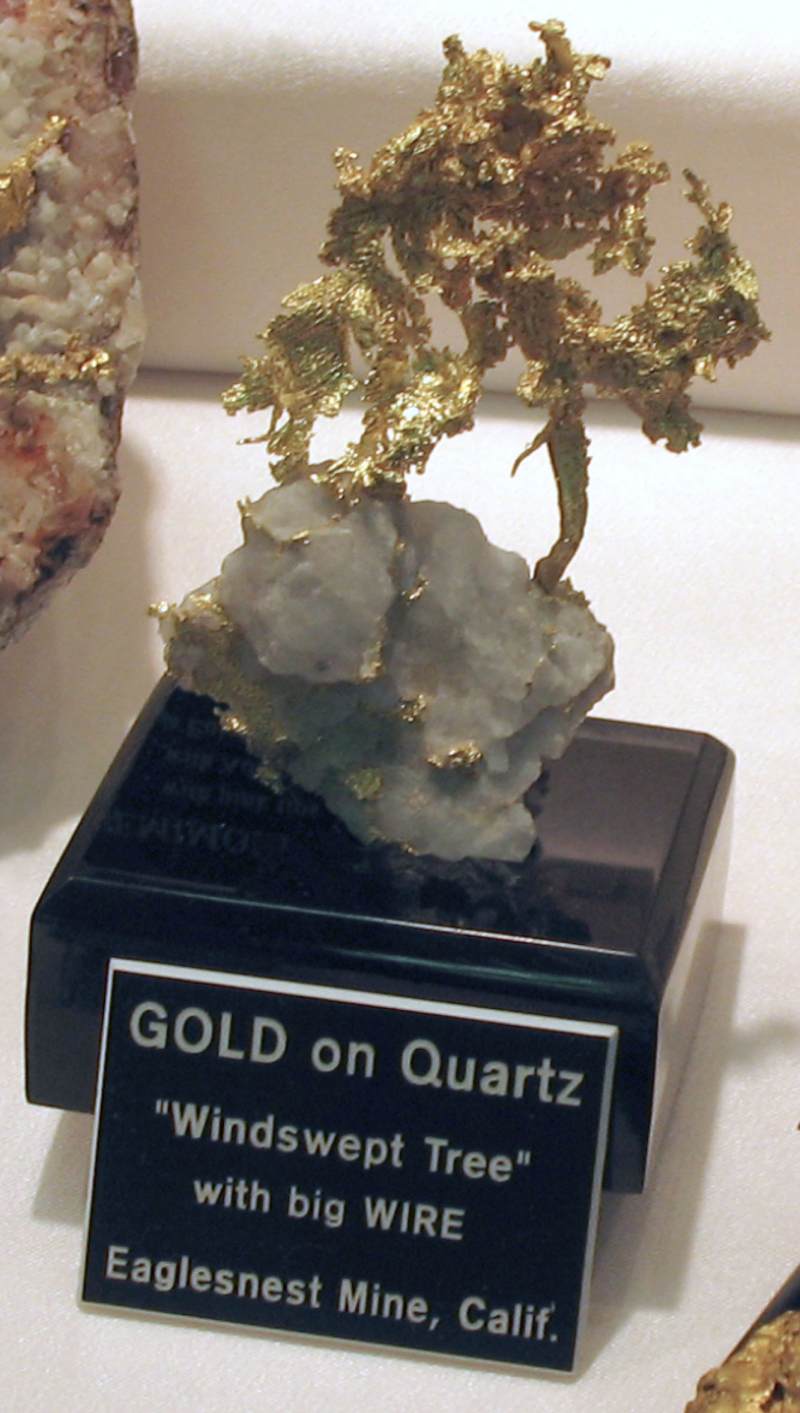 |
A natural crystallized gold tree from California |
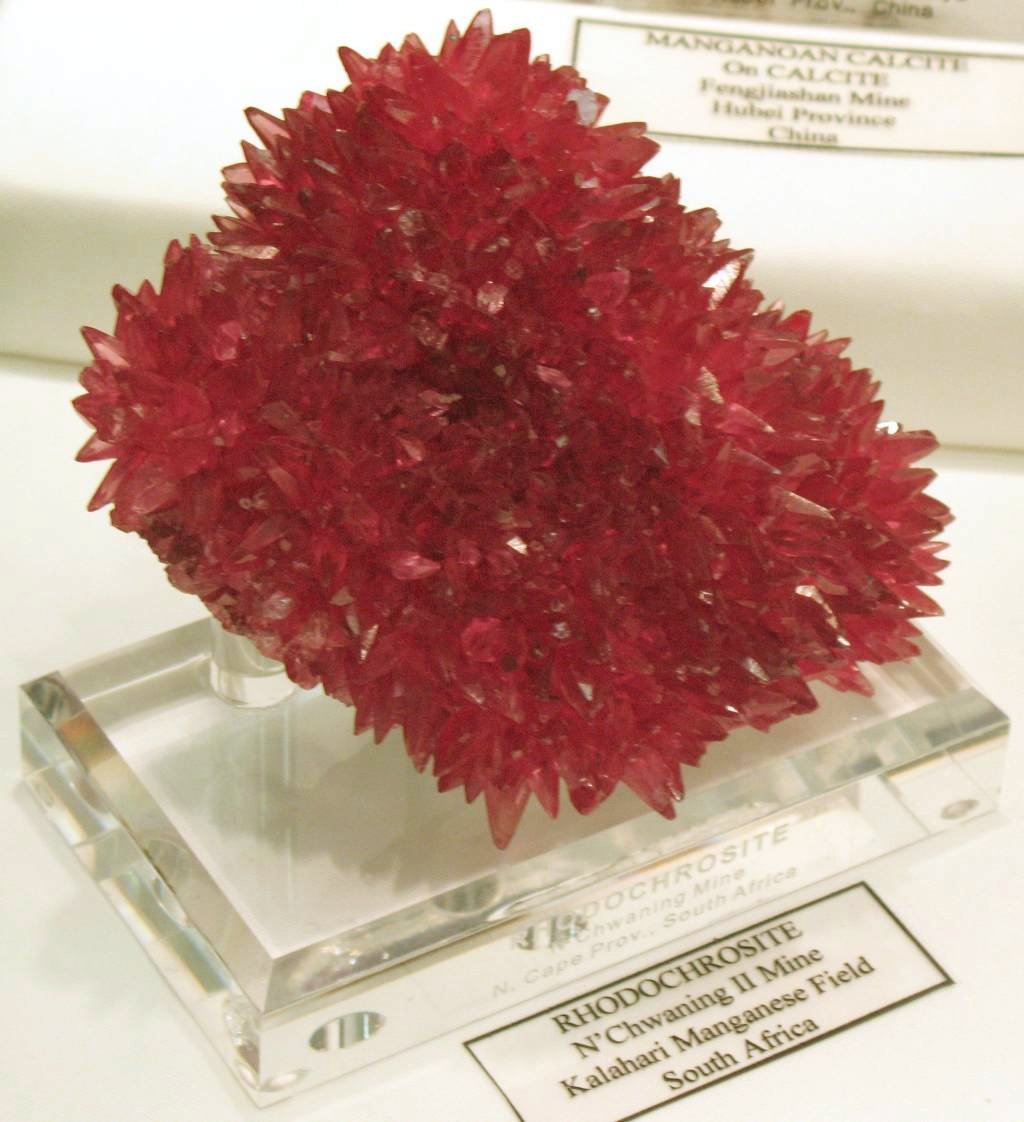 |
Some rhodochrosite crystallized in "dogtooth" crystal shapes instead of rhombohedrons. This is typical of gem rhodochrosite from Hotazel, South Africa.The rhodo from there also has a slighly more orangish overtone, and less melon pink in the red. |
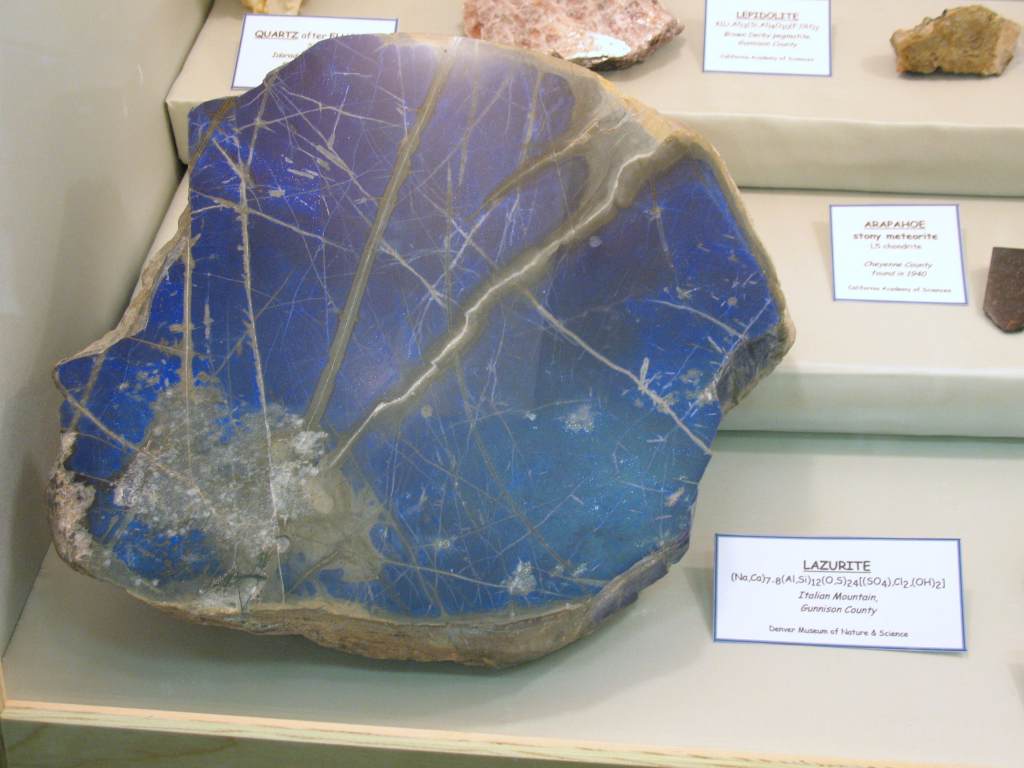 |
A very large block of gem lapis lazuli from North Italian Mt., Gunnison County, Colorado, probably the largest piece I've seen. Lapis occurs here in seams. There are also minor lapis occurrences in Chile and California. None of these are as fine as the ancient material from Afghanistan, but still can be attractive. The material here occurs above timberline, most on a private claim, and is tough to get to. It has only been mined sporadically over the years. Much of it found was very dark and grayish, and does not polish very easily. Only a small amount has the nice bright blue color, but has nice pyrite sprinkled in some pieces. |
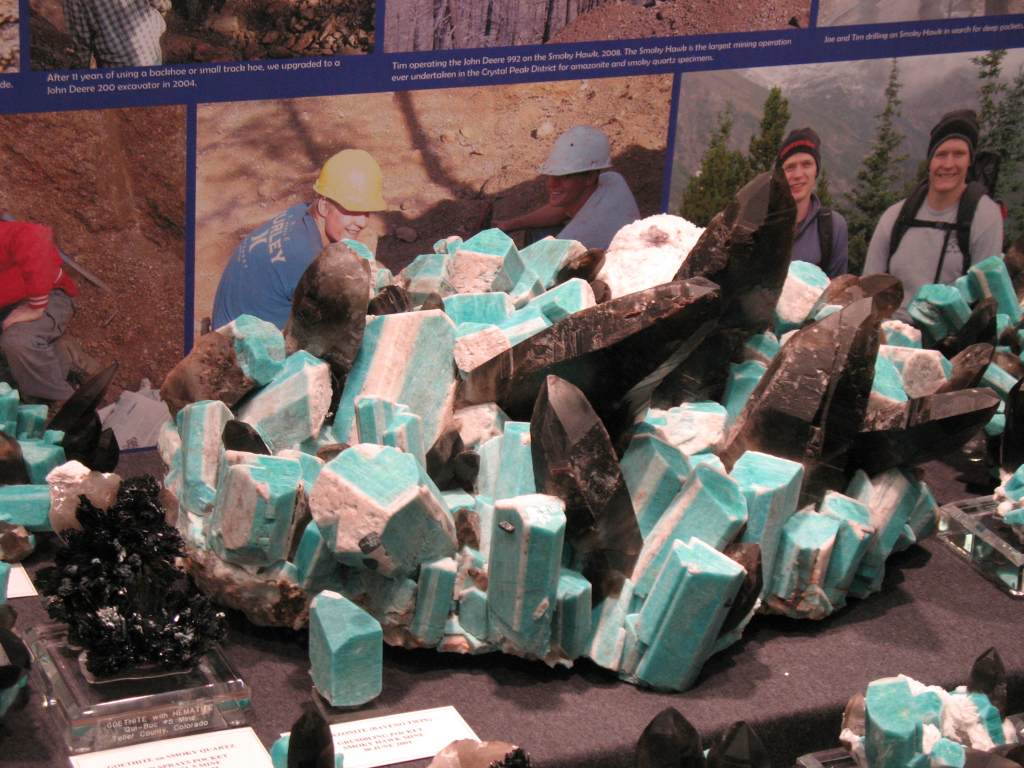 |
The huge "Legacy" amazonite and smoky quartz cluster from Joe Dorris Smoky Hawk Mine, one of the largest fine groups ever recovered from the Crystal Peak area. |
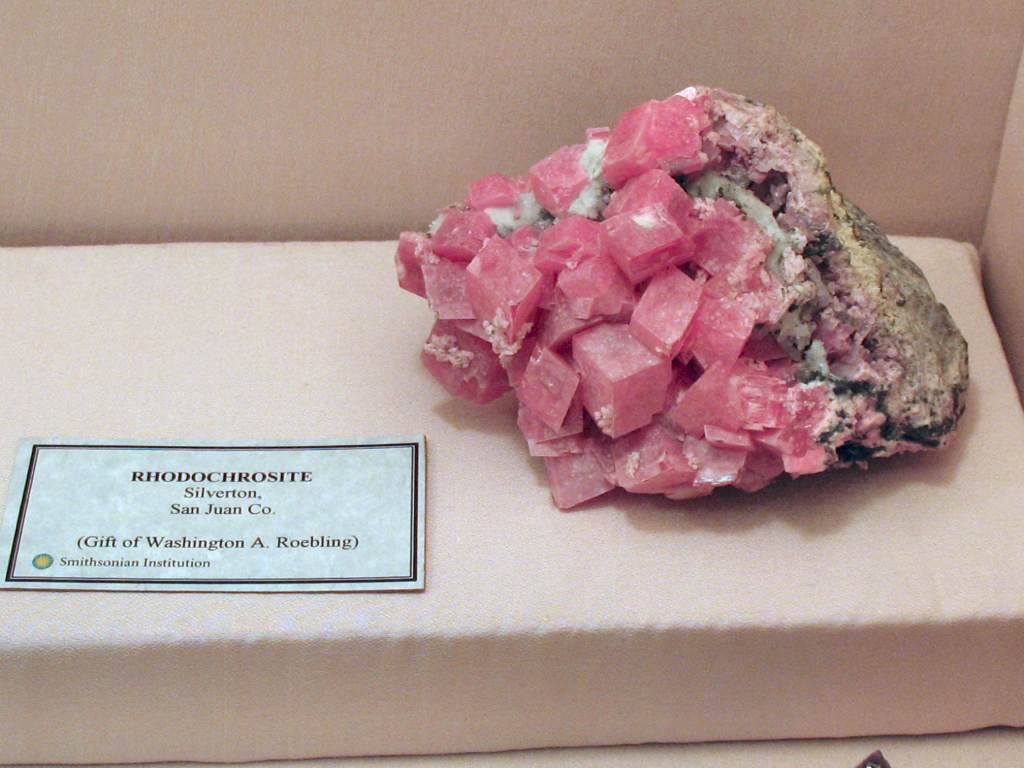 |
Rhodochrosite is also found in the San Juan Mts. in southwest Colorado. Most often the crystals are not gemmy red, but pretty opaque to translucent pink. Many fine pieces came from the old American Tunnel locality east of Silverton. There is also similar (although slightly different) material from the Grizzly Bear Mine and the Michael Breen Mine in the same general area. I don't believe any of these mines are currently working. |
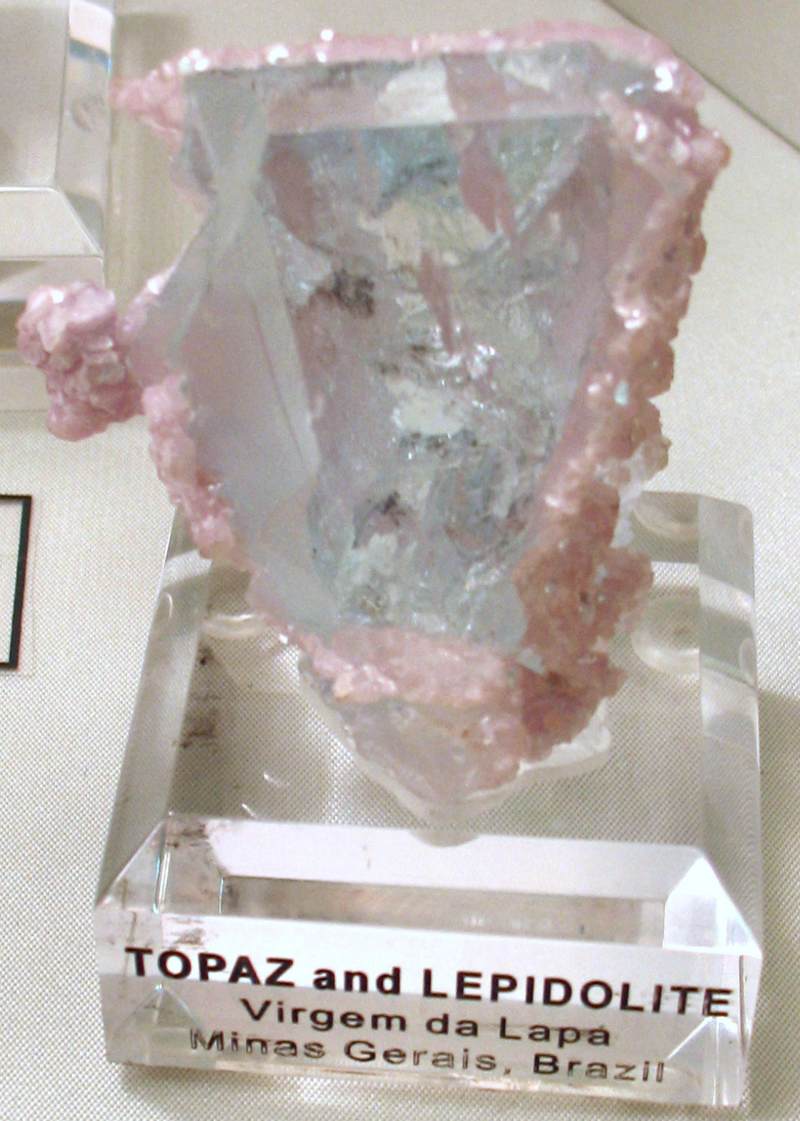 |
Unusual gem blue topaz from Virgin da Lapa, Minas Gerais, Brazil. It is unusual because it's associated with lithia mica, usually referred to as lepidolite. Lithia dikes do not often have gem topaz associated with them, although there is some at the Little 3 Mine in San Diego County, CA, and in also in Namibia I believe. |
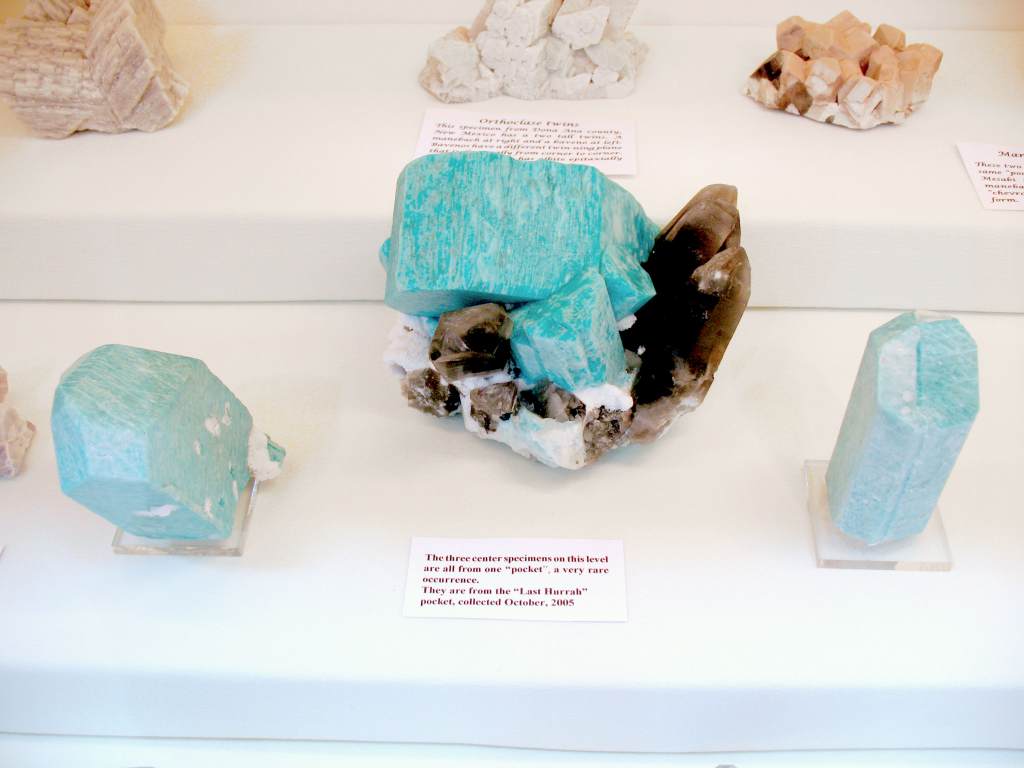 |
Sometimes microcline crystals will form twins, such as Carlsbad, Manebach, and Chevron twins. Amazonite is the green to blue variety of microcline feldspar, and twins such as these are relatively rare. |
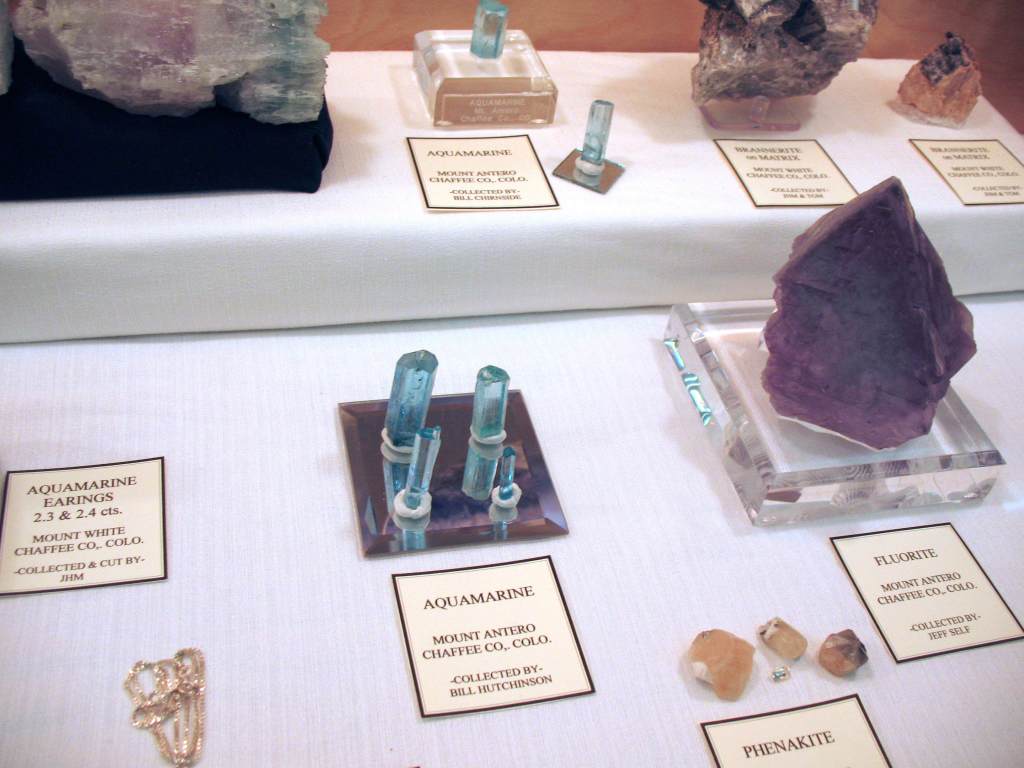 |
Part of a nice display of Mt. Antero, Colorado minerals on display at the Denver gem show. Collecting here is difficult, as it is all above timberline and has a number of dangers such as lightning, snow storms, rock slides, bad trails, and so on. Collecting is for only the warm-weather months of June through August, sometimes stretching into September or October, depending on when the snows first hit. Aquamarine, phenacite, smoky quartz, clear quartz, fluorite, feldspars, molybdenite, and other rare minerals occur here for those tough enough and persistent enough to work the area. |
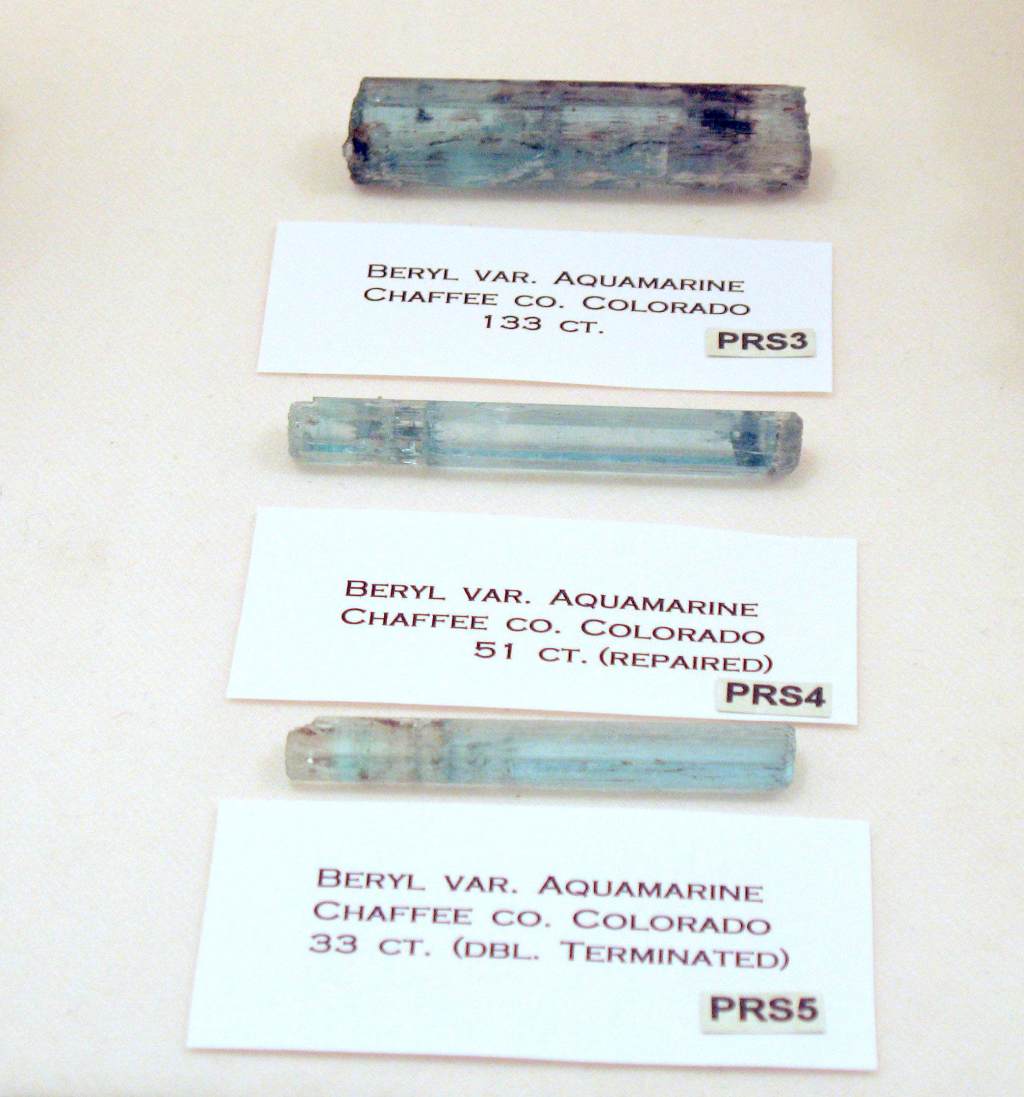 |
An example of some fine gem pencil crystals of aquamarine from Mt. Antero, Colorado. The crystals occur in pocket zones in pegmatites, mostly of the random myrolitic cavity type. |
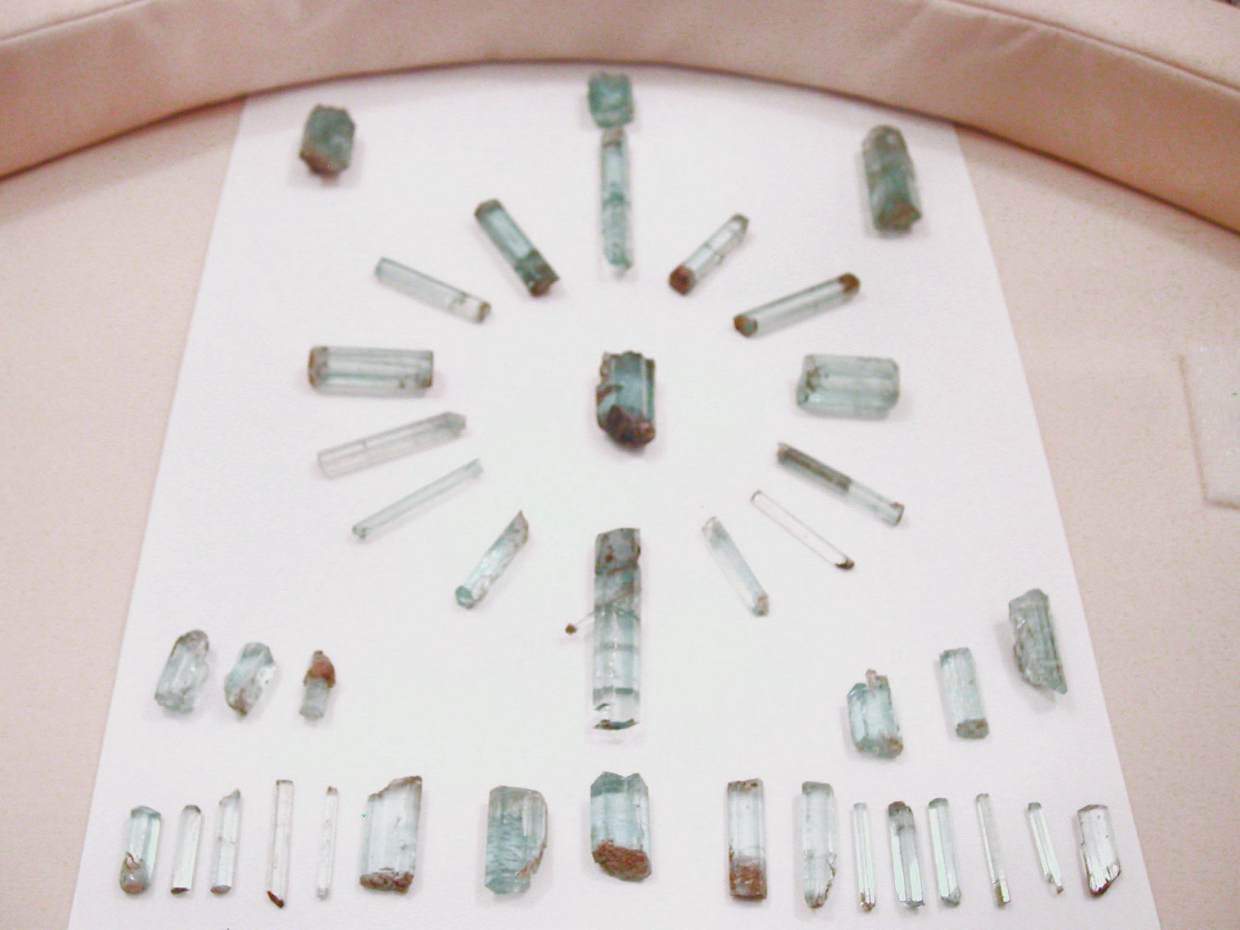 |
More samples of gem aquamarine from Mt. Antero. These crystals all came from one pocket zone worked by one collector and his friends, likely in one summer. |
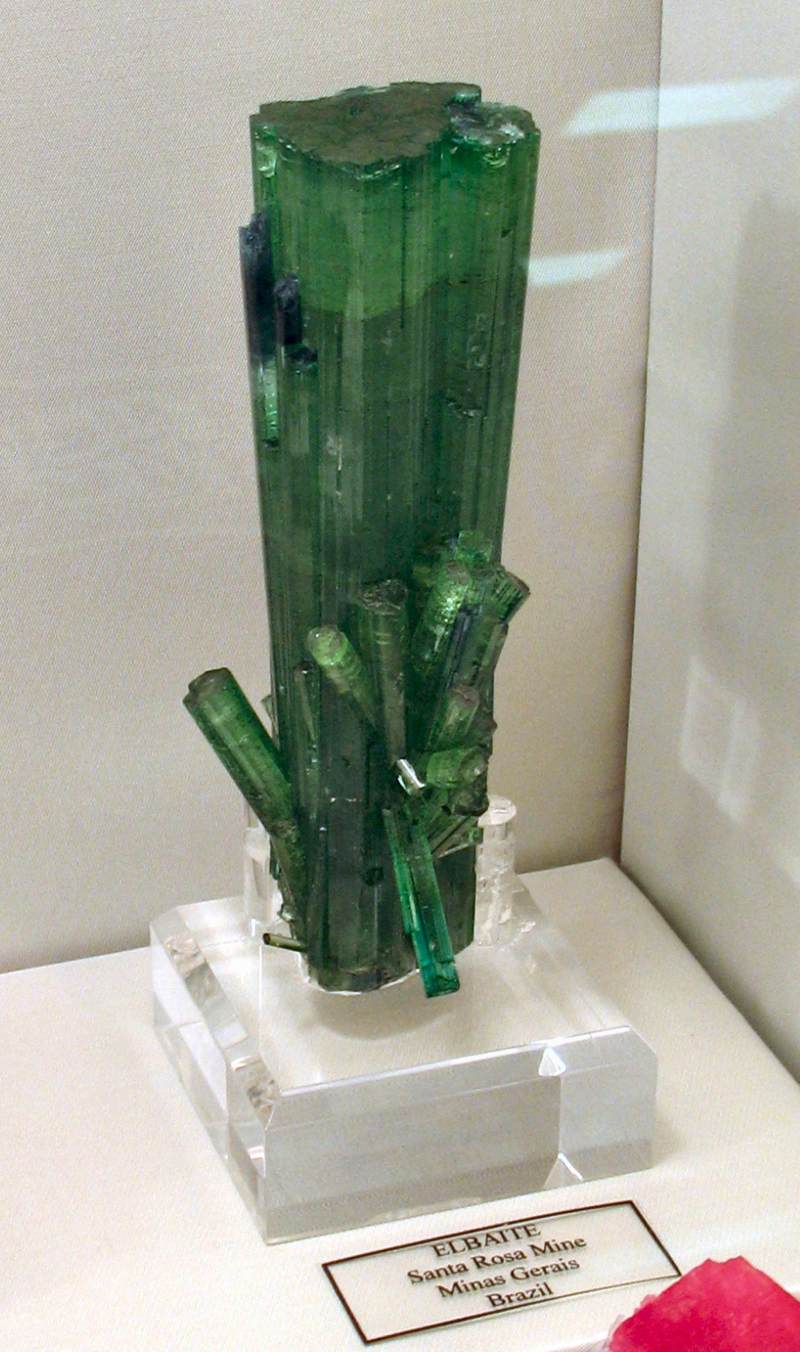 |
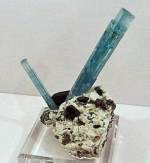
A beautiful Santa Rosa Mine (Minas Gerais, Brazil) gem green tourmaline crystal. |
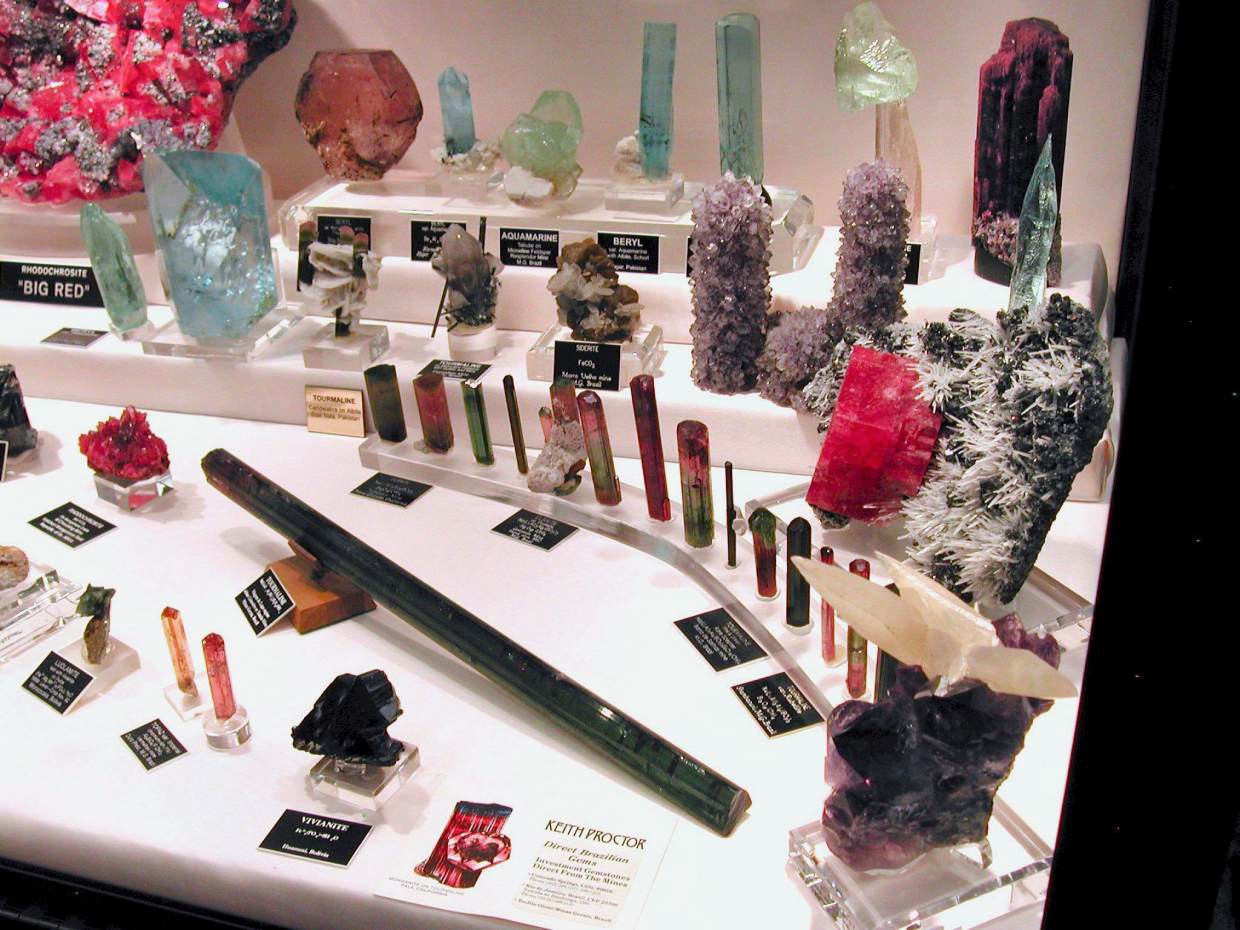 |
Some of the stunning gem crystals you can see firsthand at large gem shows. This display by Colorado Springs collector Keith Procter was on display at the Denver Gem and Mineral Show. |
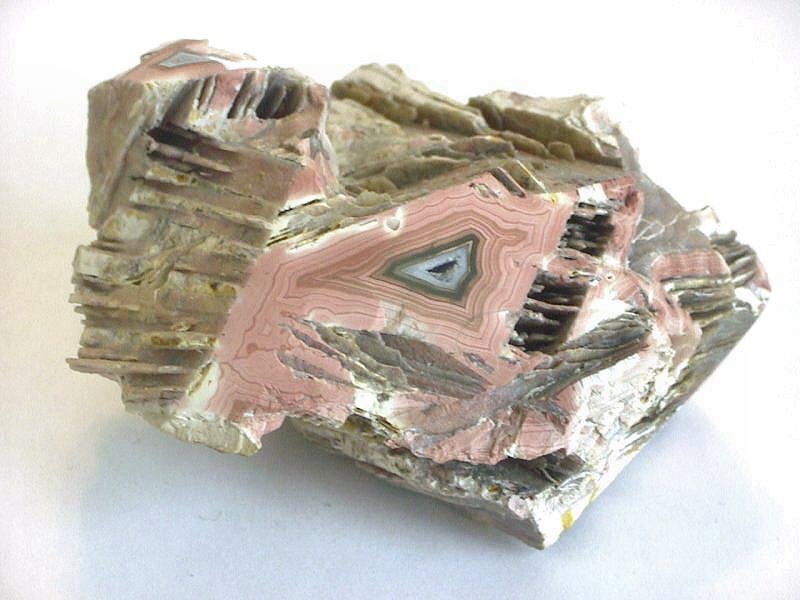 |
Supposedly this is agatized anhydrite from NY state. I traded for it at the National Gem Show in Lincoln, NE around 1975. I've not seen anything like it since, except some agate I found near Creede, CO looks a little bit like it. Spomer collection. |
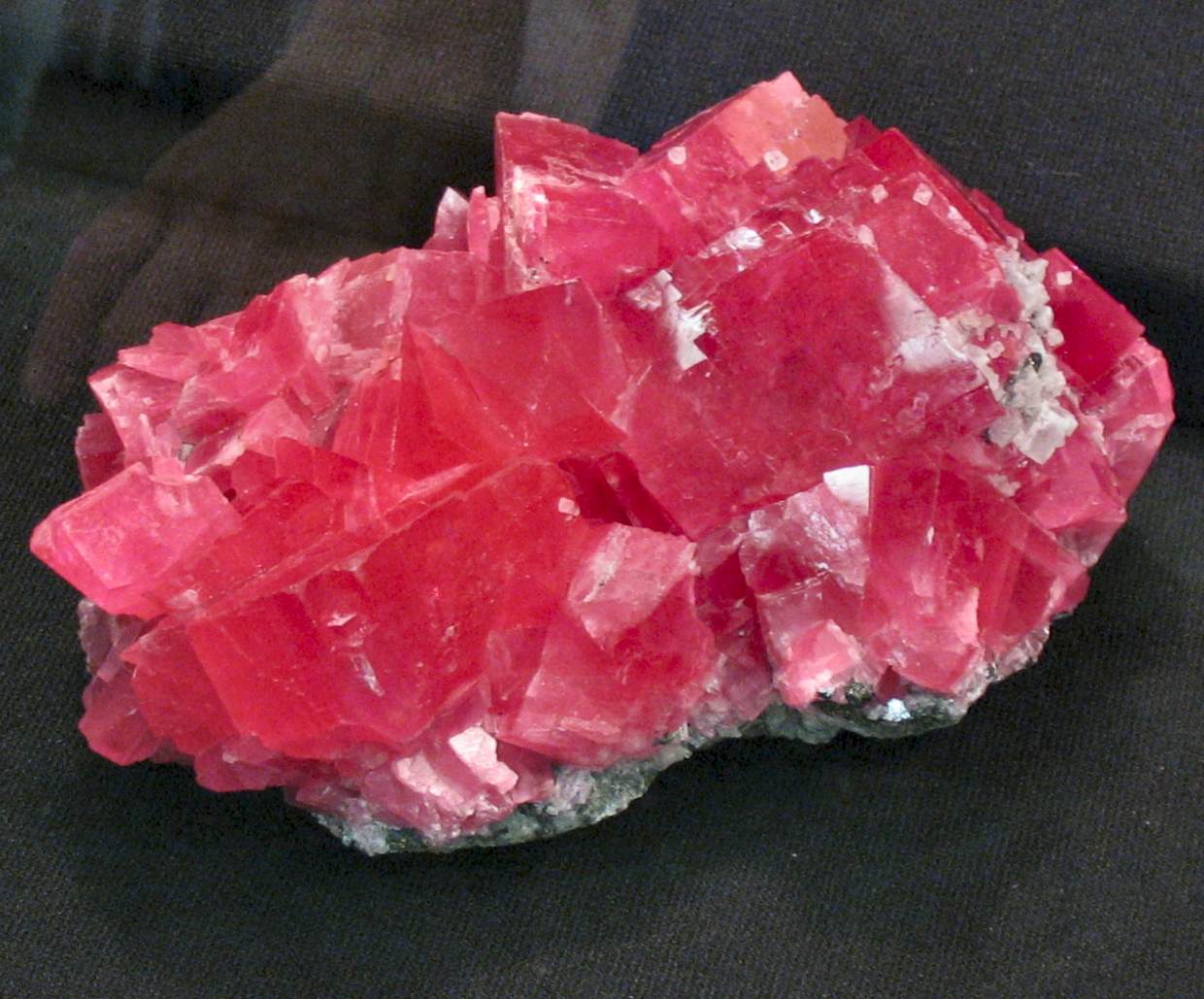 |
Another great gem rhodochrosite cluster mined at the Sweethome Mine, Alma, Colorado during the most recent period of active mining. The mine closed in 2004. |
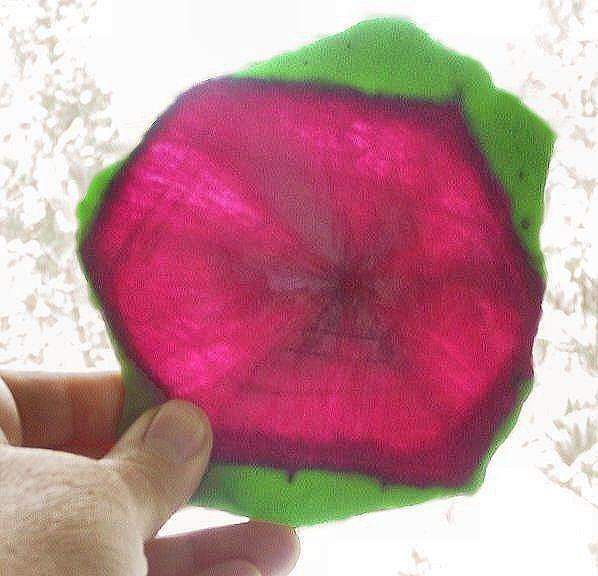 |
Fabulous large slab showing a ruby crystal cross section in zoisite, from E. Africa. Formerly in the Spomer collection. |
 |
See more photos on the previous pages: Photo Album Page 1 Photo Album Page 2 |
Come back again as I plan to add more photos as time permits.
All photos shown here are for your viewing enjoyment only. Copyrights are retained by original photographer or publisher. Please see our Copyright page for more information.
All photos, scans, gamma corrections, and color adjustments by Robert Spomer, unless otherwise noted.